Why Your HCM Platform Can’t Be Customized Enough — And How to Fix It Without a Rebuild
Your UKG, Workday, or SAP SuccessFactors implementation cost millions. It took months — maybe years — to stand up. And yet, your HR team still can’t get the platform to behave the way your organization actually works.
Sound familiar?
You need a custom approval workflow for a specific department. A role-based self-service experience for frontline workers. An automated compliance trigger tied to your unique labor rules. But every time you try to build it inside your HCM, you hit a wall — a 6-to-12-month vendor roadmap, $100K+ in consulting fees, or the dreaded warning: “That level of customization isn’t supported.”
This is the hidden cost of modern HCM platforms: they scale, but they don’t bend.
The Real Problem With Out-of-the-Box HCM
Enterprise HCM platforms like UKG, Workday, and SAP SuccessFactors are built for consistency across thousands of customers. That’s their strength — and their limitation. Configuration options take you 80% of the way. The remaining 20% — the workflows, compliance rules, and employee experiences unique to your business — are left for you to figure out.
Worse, when you do customize inside the HCM, those changes are fragile. Platform updates overwrite them. Vendor switches erase them entirely. You’re rebuilding from scratch every time.
HR operations teams — particularly those managing complex, multi-site, or shift-heavy workforces — feel this the most. Union rules. Industry-specific compliance. Frontline employee needs that a standard portal simply wasn’t designed for.
The Fix: An AI Layer That Sits Outside Your HCM
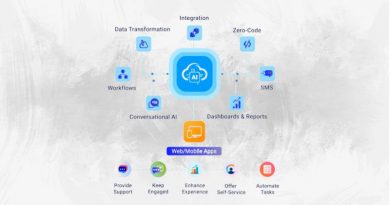
Rather than modifying your core system or migrating to a new one, a growing number of HR teams are adopting an external AI personalization layer — a purpose-built solution that connects to your existing HCM and extends it with the custom workflows, automations, and employee experiences you need.
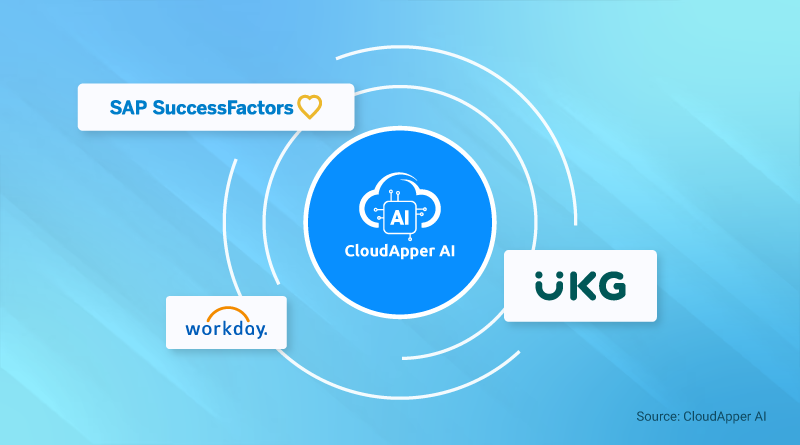
CloudApper WorkBridge is built exactly for this. It acts as an AI-native layer that sits outside UKG, Workday, Dayforce, or SAP SuccessFactors — connecting, extending, and automating — without touching the core system.
Here’s what that means practically:
- Custom workflows built in days, not quarters — shift bidding, PTO exceptions, compliance approvals
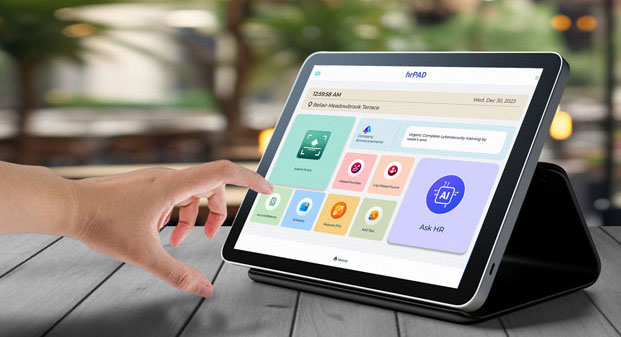
- Role-specific employee experiences for frontline, office, and remote workers from a single platform
- AI-powered automations that trigger based on your rules, not the vendor’s defaults
- No vendor lock-in — because WorkBridge lives outside your HCM, your customizations survive platform upgrades and migrations
One organization reported reducing missed time punches from 25–30% per week to under 5% after deploying WorkBridge alongside their existing HCM — without changing a single line of their core system configuration.
Who Needs This Most
WorkBridge is especially valuable for HR and operations teams that:
- Manage frontline or shift-based workforces with scheduling and compliance complexity
- Run multi-location or multi-union environments where one-size policies don’t apply
- Are stuck waiting on IT or vendor support to implement basic workflow changes
- Want the efficiency of AI automation without the risk of destabilizing a live HCM
If your HR team regularly finds itself working around the platform instead of working within it, that’s the signal.
How to Get Started
You don’t need to replace anything. The process is straightforward:
- Identify the workflows your HCM can’t support — approvals, compliance triggers, self-service gaps
- Map those to WorkBridge’s extension layer — no-code configuration, no IT dependency
- Connect to your existing HCM via API — data stays in your system of record; WorkBridge handles the experience layer
- Deploy and iterate — add new automations as your needs evolve, without touching the core
For a deeper look at how AI integration works across platforms like UKG, Workday, and SAP SuccessFactors, read: How to Seamlessly Integrate AI with HR Platforms Like UKG, Workday, or SAP SuccessFactors
The Bottom Line
Your HCM platform is not going away — and it shouldn’t. But it was never designed to handle every edge case, every workflow, every workforce type in your organization. That gap is costing your HR team time, flexibility, and employee satisfaction.
CloudApper WorkBridge closes that gap — without a rebuild, without a replacement, and without waiting on a vendor roadmap.
Your HCM does the heavy lifting. WorkBridge makes it work the way you need it to.
Ready to extend your HCM without replacing it? Explore CloudApper WorkBridge →