Manual vs Automated Testing in IoT: When to Use Each Approach
The Internet of Things continues to reshape how software interacts with the physical world. From smart homes and healthcare devices to industrial systems and connected vehicles, IoT solutions combine hardware, software, networks, and real-world environments. This complexity makes testing essential for reliability, safety, and user trust.
Choosing between manual and automated testing in IoT is rarely straightforward. In this blog, we examine how each approach fits into IoT testing, when one is more effective than the other, and how teams can combine both to manage complexity without sacrificing quality.
What Makes IoT Testing Different
IoT testing differs from traditional software testing because it spans multiple layers and environments. A single IoT solution may involve embedded firmware, cloud services, mobile or web interfaces, and physical devices communicating over unstable networks.
Key factors that make IoT testing unique include:
- Dependence on physical devices and sensors
- Multiple communication protocols and data formats
- Variable network latency and connectivity
- Real-world environmental conditions, such as motion, temperature, or power fluctuations
These characteristics directly influence whether manual or automated testing is the better choice.
Understanding Manual Testing in IoT
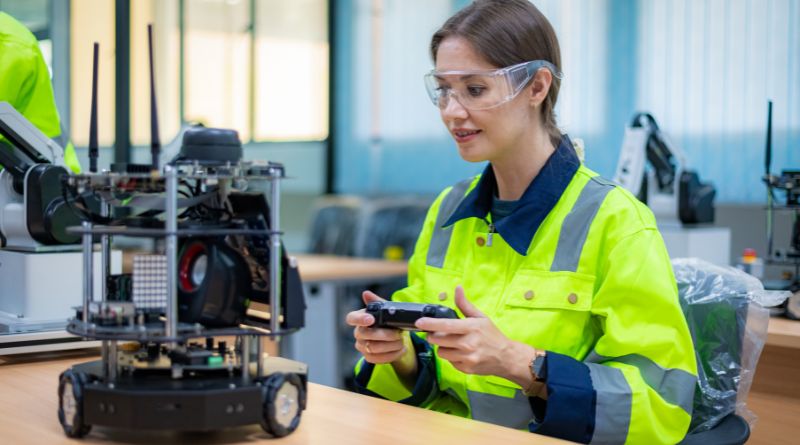
Manual testing in IoT relies on human interaction with devices, applications, and environments to observe real-world behavior. Testers physically interact with devices, simulate user actions, and explore edge cases that are difficult to script. This approach is especially valuable when validating usability, device setup flows, sensor accuracy, and behavior under unpredictable environmental conditions. Manual testing provides contextual insight that helps uncover issues related to physical handling, user expectations, and environmental variability that automated tests often cannot detect.
Understanding Automated Testing in IoT
Automated testing focuses on validating repeatable behaviors across IoT systems at scale. It is commonly applied to APIs, data processing pipelines, cloud services, and communication logic between devices. Automation enables teams to test large combinations of configurations and inputs efficiently. As systems mature, automation becomes critical for regression testing, performance validation, and continuous delivery. Advanced approaches such as AI-based software testing further strengthen automation in QA by adapting tests to changing data patterns and system behavior.
Key Differences Between Manual and Automated IoT Testing
Manual and automated testing address different needs within IoT projects. Understanding how they compare helps teams choose the right approach for each scenario.
Comparison: Manual vs Automated IoT Testing
| Aspect | Manual Testing | Automated Testing |
| Speed | Slower and dependent on human effort | Fast and repeatable |
| Scalability | Limited by device and tester availability | Scales across devices and data sets |
| Flexibility | High for exploratory and edge cases | Best for stable and repeatable flows |
| Consistency | Can vary between test runs | Highly consistent execution |
| Best use cases | Usability, setup, and physical interaction | Regression, performance, CI pipelines |
Both approaches are essential and serve complementary roles in IoT testing.
When Manual Testing Is the Better Choice
Manual testing remains critical in many IoT scenarios where human judgment and real-world interaction matter most.
Early Development and Prototyping
During the early stages, IoT systems evolve rapidly. Manual testing allows teams to explore functionality, validate assumptions, and provide fast feedback without maintaining automation scripts that may quickly become outdated.
Usability and Physical Interaction
Device setup, physical controls, and user experience require direct observation. Manual testing helps identify friction points that automation cannot detect, such as confusing interactions or poor accessibility.
Environmental and Edge Scenarios
Testing under unusual environmental conditions, such as signal interference or sensor anomalies, often requires hands-on experimentation that automation struggles to simulate accurately.
These scenarios highlight where manual testing adds irreplaceable value.
When Automated Testing Is the Better Choice
Automation becomes increasingly important as IoT systems grow in complexity and scale.
Regression Testing Across Devices
Automated tests ensure that updates do not break existing functionality across multiple device types, firmware versions, and configurations.
Performance and Load Testing
Automation allows teams to simulate large volumes of device data and concurrent activity, helping identify performance bottlenecks that manual testing cannot uncover efficiently.
Continuous Integration and Delivery
Automated testing supports frequent releases by providing fast and reliable feedback, enabling teams to maintain quality without slowing development.
These use cases demonstrate where automation delivers the greatest return.
Balancing Manual and Automated Testing in IoT
Most effective IoT testing strategies combine manual and automated approaches. Manual testing focuses on exploration, usability, and early validation, while automation handles repetitive, data-driven, and large-scale scenarios.
Teams should regularly reassess this balance as systems evolve. Overusing manual testing can slow delivery, while relying too heavily on automation can miss real-world issues. A hybrid strategy provides both depth and coverage.
Common Challenges in IoT Testing
IoT testing introduces challenges that affect both manual and automated approaches.
Common challenges include:
- Limited availability of physical devices
- Difficulty reproducing real-world environments
- Network instability and inconsistent data flow
- Hardware dependency and firmware variability
- Tooling limitations for embedded systems
Recognizing these challenges helps teams plan realistic and flexible testing strategies.
Best Practices for Choosing the Right Approach
Rather than defaulting to one method, teams should choose testing approaches based on system context, risk, and long-term goals. A thoughtful selection process helps avoid wasted effort and ensures testing delivers meaningful coverage.
Assess Risk and Complexity
Start by identifying which components of the IoT system pose the greatest risk. Areas involving safety, security, data accuracy, or critical device behavior often require deeper validation. Understanding complexity early helps determine where manual insight or automation precision is most valuable.
Match the Method to the Scenario
Not every scenario benefits equally from automation or manual testing. Exploratory scenarios, physical interactions, and early-stage features often need hands-on testing, while stable workflows and data processing benefit from automation. Matching the method to the scenario improves efficiency and test effectiveness.
Review and Adjust Over Time
IoT systems evolve continuously as devices, networks, and usage patterns change. Testing strategies should be reviewed regularly to ensure they remain aligned with current risks and system behavior. Adjusting the balance over time helps teams maintain quality as complexity grows.
Together, these practices support informed decisions and create a flexible testing strategy that adapts as IoT systems mature.
The Future of IoT Testing
The future of IoT testing will be driven by growing system complexity, larger device ecosystems, and smarter automation capabilities. Advances in simulation, virtualization, and intelligent testing tools will make it easier to validate behavior across diverse environments and network conditions, while automation will continue to expand to support scale and speed. At the same time, manual testing will remain essential for validating real-world interactions, usability, and unexpected scenarios, making a balanced approach critical for ensuring IoT systems remain reliable, secure, and adaptable as connected technologies evolve.
Conclusion
Manual and automated testing both play vital roles in IoT quality assurance. Manual testing delivers valuable insight into real-world behavior, usability, and physical interaction, while automation provides speed, consistency, and scalability across complex systems and device variations.
The most effective IoT testing strategies recognize when to use each approach and how to balance them thoughtfully. By aligning testing methods with system risks, user expectations, and delivery goals, teams can build reliable, secure, and user-centered IoT solutions that perform consistently in real-world conditions and continue to scale as systems evolve.